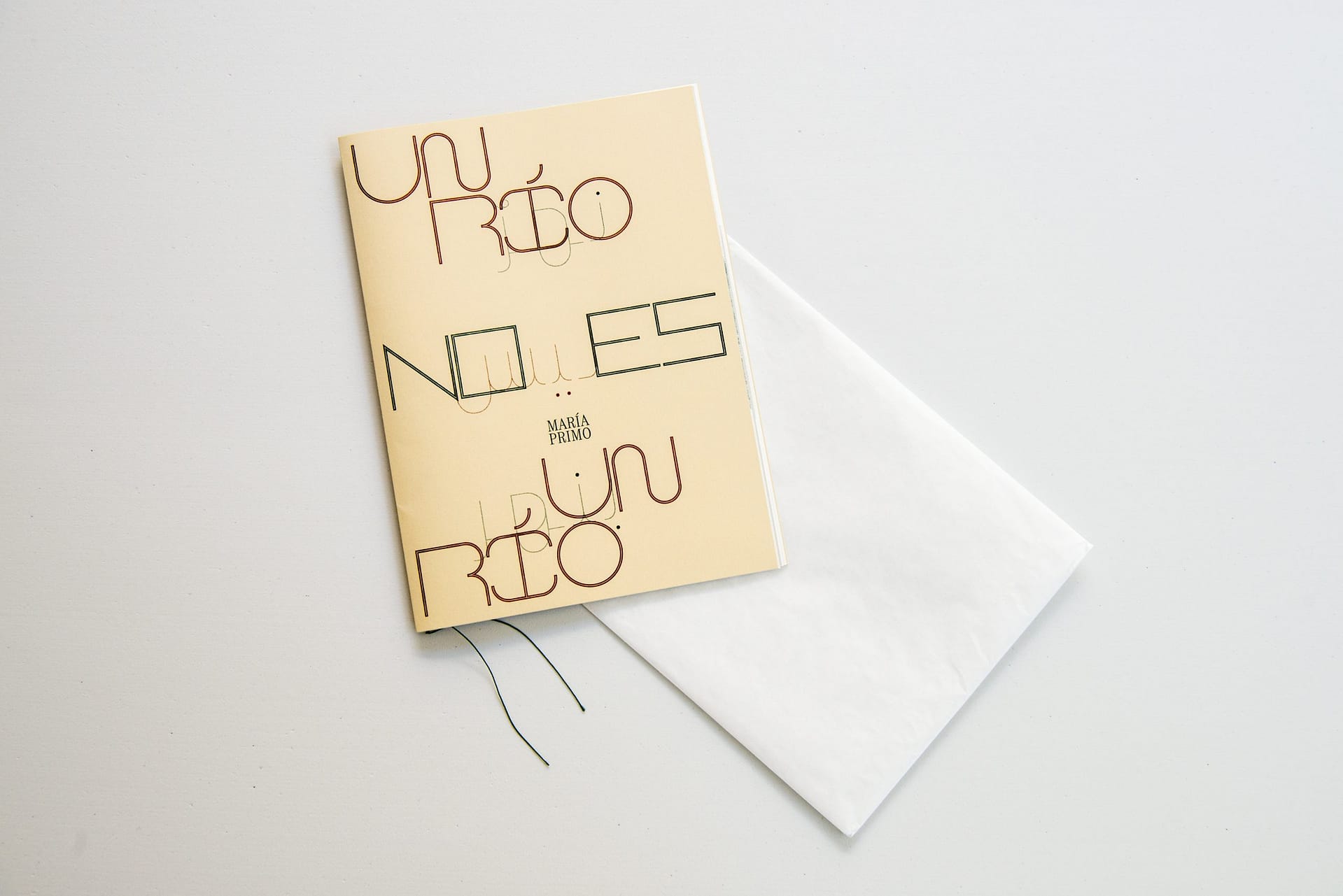
A RIVER IS NOT A RIVER (2021-2023)
Consulta el dossier de Un río no es un río en español aquí
«Inspired by the Nile and ancient Egypt, I tell different stories interconnected by the river. This allows me to question how do we relate to nature and reflect on issues of contemporary ecology (post-nature, post-anthropocentrism, ecofeminisms, the impact of climate change, the importance of ancestral knowledge and bioclimatic architecture).
It is a complex and multidisciplinary project (there are videos, ceramics, archival material as well as photographs).»
María Primo
While working on an artist residency in Luxor, Egypt, María Primo approached the Nile to listen to some of the stories that the river conceals: mythological tales, women pharaohs, tomb raiders, ancient buildings and vernacular architecture. The act of listening also led her to encounter major threats, including the deterioration of patrimonial sites due to the climate crisis and the impact of mass tourism.
Through a multidisciplinary corpus of work that comprises photographs, pottery and video, often created by the use of found and archival materials, her practice offers new narratives that speak about water, shift the anthropocentric gaze and highlight the importance of recovering traditional epistemologies.
The title of the exhibition alludes to the river as an articulating axis that refers to the Egyptian architect Hassan Fathy, a pioneer of sustainable architecture, who proposed that “a door is not just a door” but also a threshold between the exterior and interior worlds.
The exhibition is presented through interconnected conceptual sections in which the artist skilfully navigates through different temporalities, taking the viewer on a journey from remote centuries to the present, by using a sophisticated fusion of fiction and reality, legends and historical events. The ensemble constructs a story whose framework questions our relationship with nature and the complex interconnected links which underlie the current ecological crisis.
Blanca de la Torre (curator for the exhibition in
Casa Árabe, Madrid, Sept. 2023)
…The river will serve the author as a guiding thread to stitch together a series of short stories that intertwine, where reality merges with myth and the past coexists with the present to allude to history, architecture, climate crisis, exploitation of natural resources, and women. A journey that rescues the mythological exploits of the god Hapi, real stories of powerful queens, tomb raiders, and visionary architects, where the complex relationship between man and his natural environment and his unrepentant anthropocentrism resonates.
Gloria Crespo (Babelia, El Pais, 28 de Marzo 2024)
We are accustomed to knowing and acknowledging the world around us from a single perspective, our own. An anthropocentrism, which distances man from nature to the point of the latter’s domination. Here, María Primo seeks to challenge this current relationship by recovering forgotten and concealed traditions. She gives us a narrative of returning to nature.
Rather than approaching the Nile through the camera’s gaze, María Primo turned to listening. The photographs in the exhibition emulate a posture of enchantment and responsibility. A central landscape photograph of the riverbanks with its innovative display distorts engrained perceptions. Primo’s listening is a shift from our current normalised way of knowing or epistemology. She leaves us noticing ephemeral details with a skewed perspective.
This new way of looking returns to an old way of knowing. Here, legendary tales and fictional stories that long animated the riverbanks are equal to the sources of history. The multidisciplinary nature of the exhibition enacts an epistemic shift which marries myth to history. A factual Description d’Égypte sits alongside a hymn to Hapy, the Ancient Egyptian God of the Nile. Primo crafts these sources into contemporary interpretations. As if the river were recalling us to a past time of cohabitation between man and nature.
Displaying these works in Bayt al Sinnari holds a particular significance. It mirrors Primo’s interest in the vernacular architecture which she encountered in Luxor. Also, it was in this Ottoman mansion that Napoleon’s scientific commission began its work more than two centuries ago. Today, the artist displaces this scientific discourse with an indigenous and humble one. Now, the Nile becomes a river that bends our denial.
Farida Youssef
(Text for exhibition at Sinnari House, El Cairo, sept. 2024)

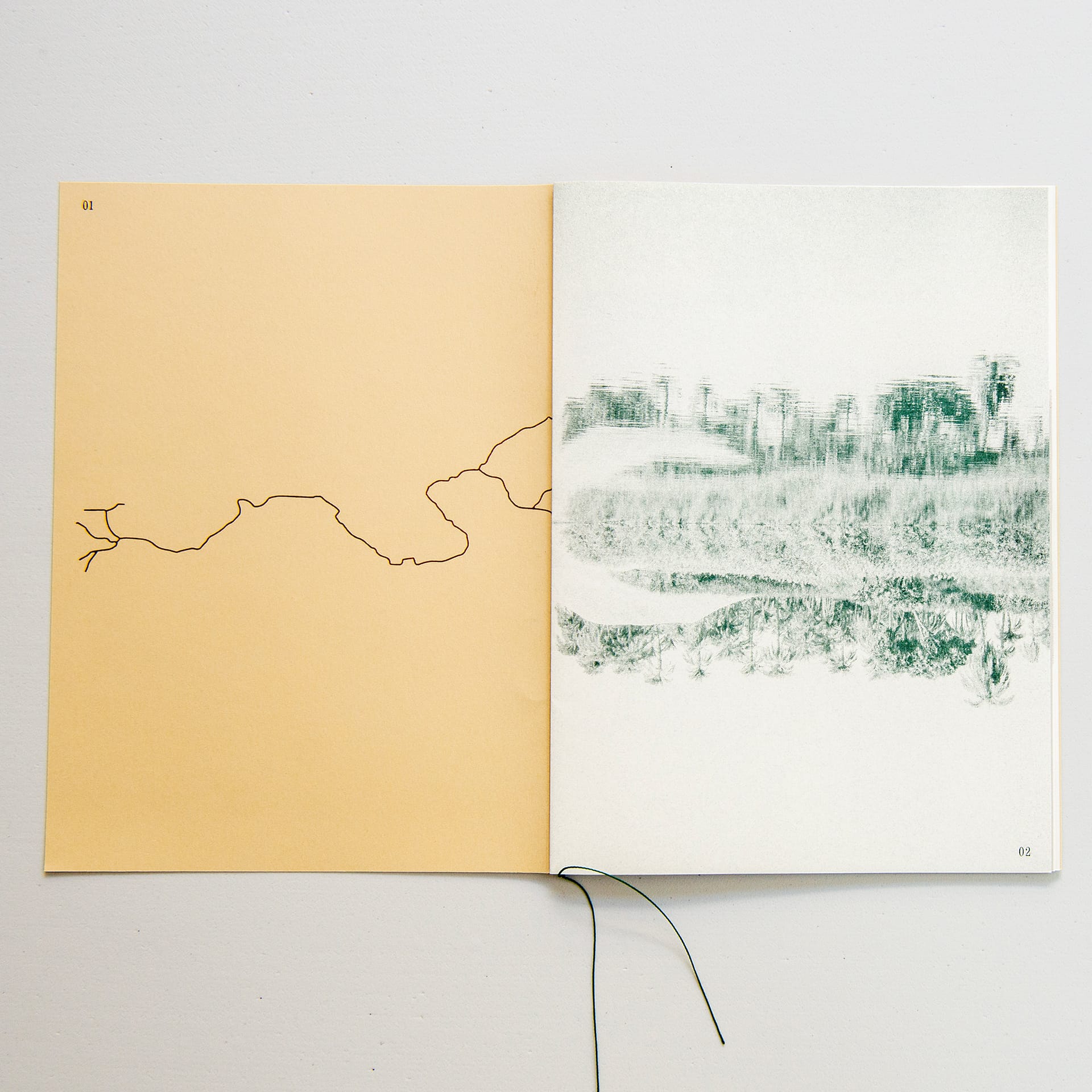
A river is not a river, 2023
ARCHIVAL PIGMENT PRINT.
170cm x 122cm
The Egyptian worldview of the universe was dominated by the image of a central river through which their civilisation and life were conceived.
The Nile was also considered as a spiritual symbol represented by the figure of Hapy (Hep), an androgynous being who was not the divine personification of the Nile per se, but was instead associated to the origin of its waters and the phenomenon of annual floods. The name Hep dates back to Egypt’s pre-dynastic era (from 4000 to 3200 BC) in a region where Hep was believed to live in a cave near a waterfall with a harem of frog goddesses; he emerged once a year, causing floodwaters to rise. This Being was the great symbol of earth’s fertility, bound to the country’s prosperity as well as to animal and human procreation.
Queen-pharaoh Hatshepsut, 2023
ARCHIVAL PIGMENT PRINT.
150cm x 100cm
Head of Hatshepsut with pharaonic beard, Deir el-Bahri, (18th dynasty). According to Egyptian tradition, no woman could assume the total power of a pharaoh. Despite many efforts to erase her from history, she is recognized as one of the great pharaohs of Ancient Egypt. Her reign was characterized by peace, prosperity and commercial expansion.


God Dies by the Nile, 2024
Palm reed screen
Ink print on 100% Egyptian cotton fabric.
Prototype of a folding screen designed by the artist and crafted by a Luxor artisan whom I met during my residency in October 2021. Created for the exhibition at Sinnari House, Cairo, September 2024.
The title God Dies by the Nile comes from the book by the renowned Egyptian author Nawal El Saadawi, which confronts the oppression of women under patriarchal rule in rural Egypt.
God Dies by the Nile, 2023
ARCHIVAL PIGMENT PRINT
75cm x 50cm
A triptych of photographs that gradually become overexposed, moving toward veiling. Woman in her traditional black attire in front of one of the colossi of pharaoh Amenhotep III, on the boundary between the fertile zone and the desert. Since the scientific revolution and the industrial era, anthropocentrism has wanted to impose itself and dominate nature and women, separating itself from both.

We are river, 2023
ARCHIVAL PIGMENT PRINT
110cm x 80cm
The river keeps telling us…, 2023
ARCHIVAL PIGMENT PRINT
75cm x 50cm






Synthetic Horus, 2023
ARCHIVAL PIGMENT PRINT.
75cm x 50cm
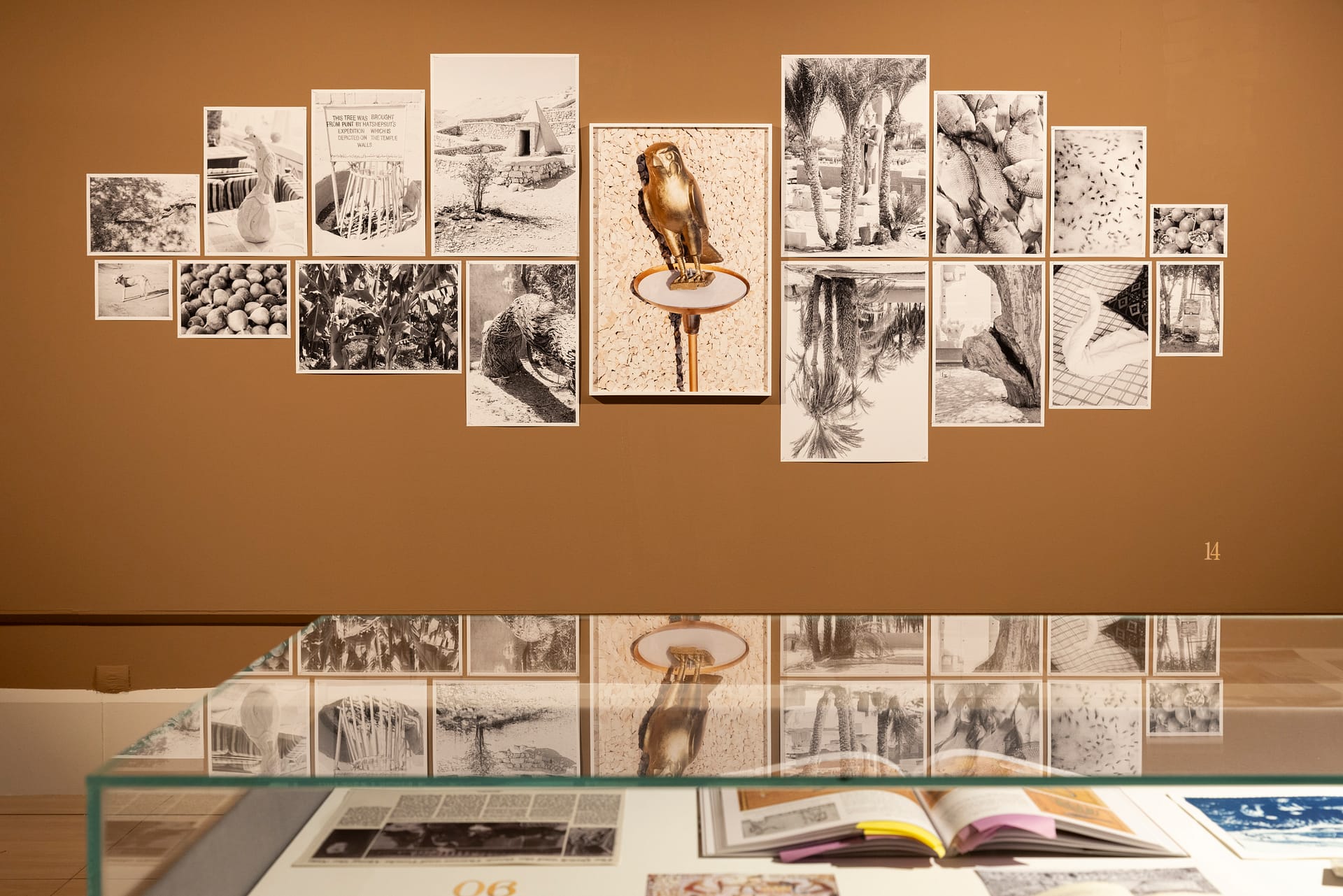
Detail of the banners used for the official inauguration of the Avenue of the Sphinxes with the express visit of President Abdel Fattah al-Sisi to Luxor in November 2021. The falcon represents the god Horus, symbol of power.
Post Nature Mosaic, 2023
ARCHIVAL PIGMENT PRINTS
-
At the entrance of Deir el-Bahari, a dead root of what was once a myrrh tree brought back on the famous expedition to the Land of Punt.
-
Anubis is the overseer of the tombs associated with death and the afterlife, lord of necropolises and patron saint of embalmers, he is represented as a jackal or wild dog. Today the entire area around the Theban Necropolis is filled with packs of abandoned and hungry feral dogs.
-
In Ancient Egypt, the fly was believed to hold protective powers, so amulets containing this insect were widespread. It was also associated with defeating the enemy, because of the fact that blood attracts flies. With the advent of the New Empire period (1550-1070 BC), the Order of the Golden Fly or Fly of Pain came into existence, the highest distinction (gold or silver) which the pharaoh could bestow upon a soldier.
-
Source of drinking water from the Nile.
-
Fruits from the local market.

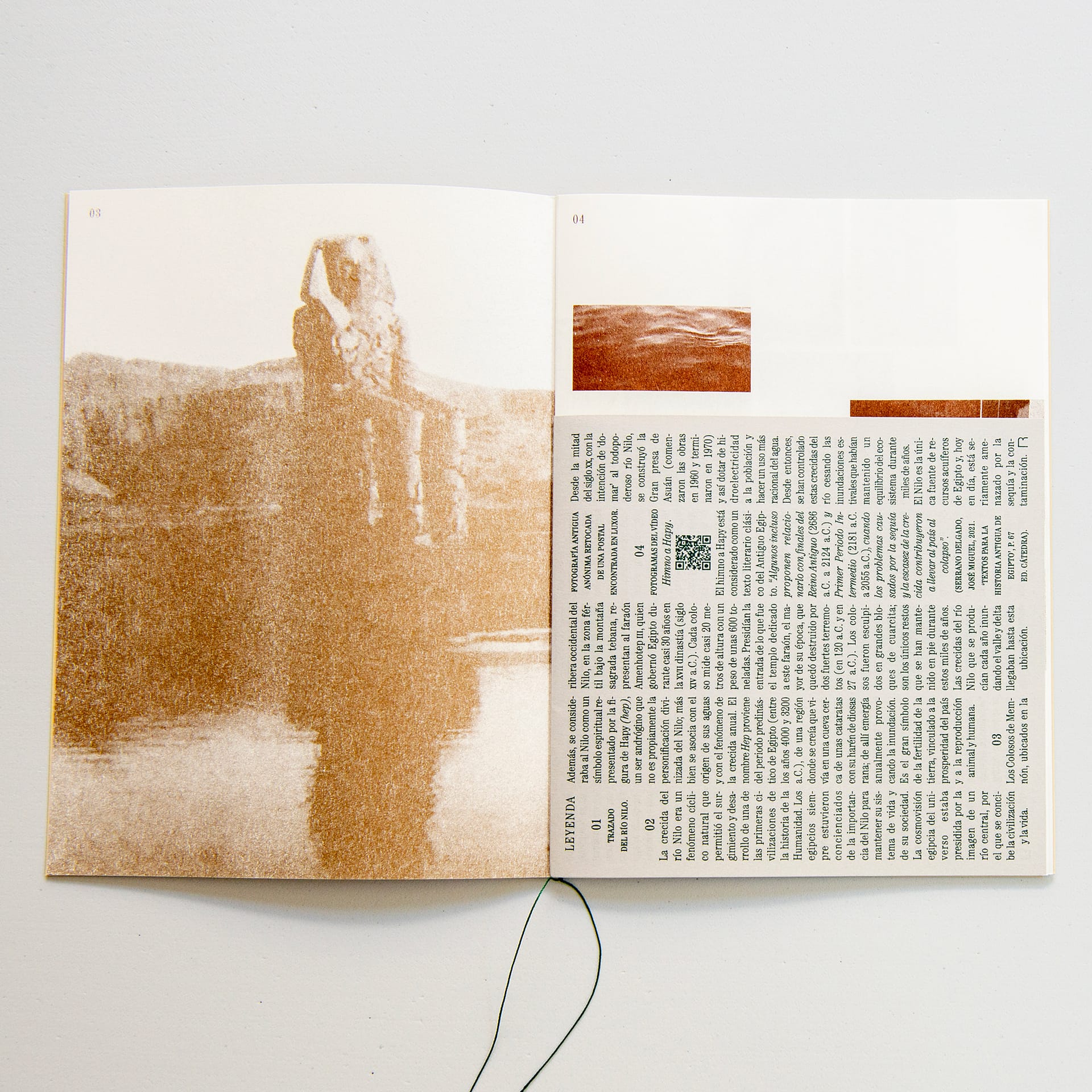
The Colossi of Memnon, 2023
ARCHIVAL PIGMENT PRINT FROM SCANNED AND RETOUCHED ANONYMOUS OLD POSTCARD FOUND IN LUXOR AND ORIGINAL POSTCARD.
100cm x 70cm
The Colossi of Memnon, located on the west bank of the Nile, represent the pharaoh Amenhotep III, pertaining to the 17th dynasty (14th century B.c.). Each colossus is about 20 meters high weighing 600 tons, carved in large quartzite blocks. The flooding of the Nile River inundated the valley and the delta reaching this location.

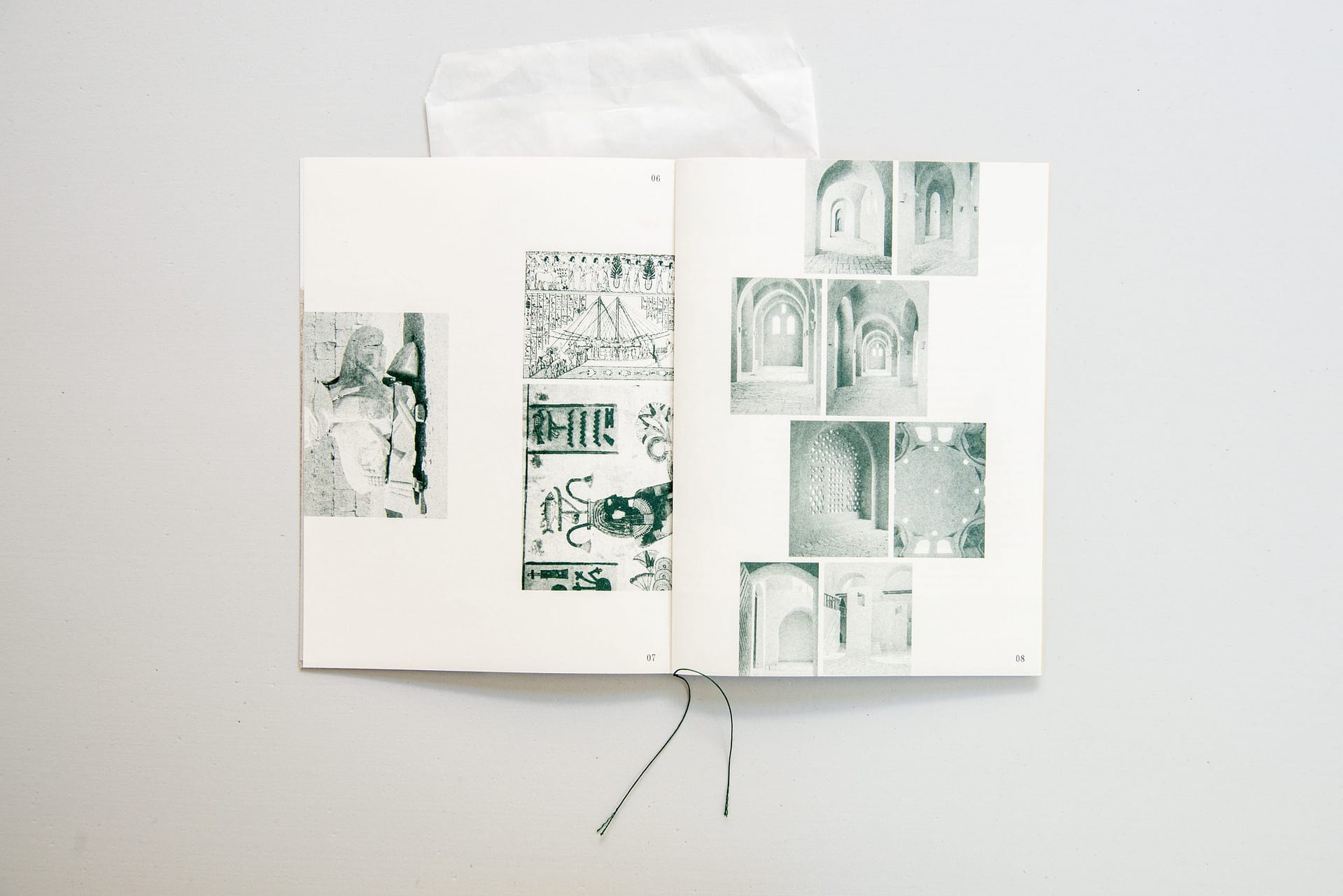
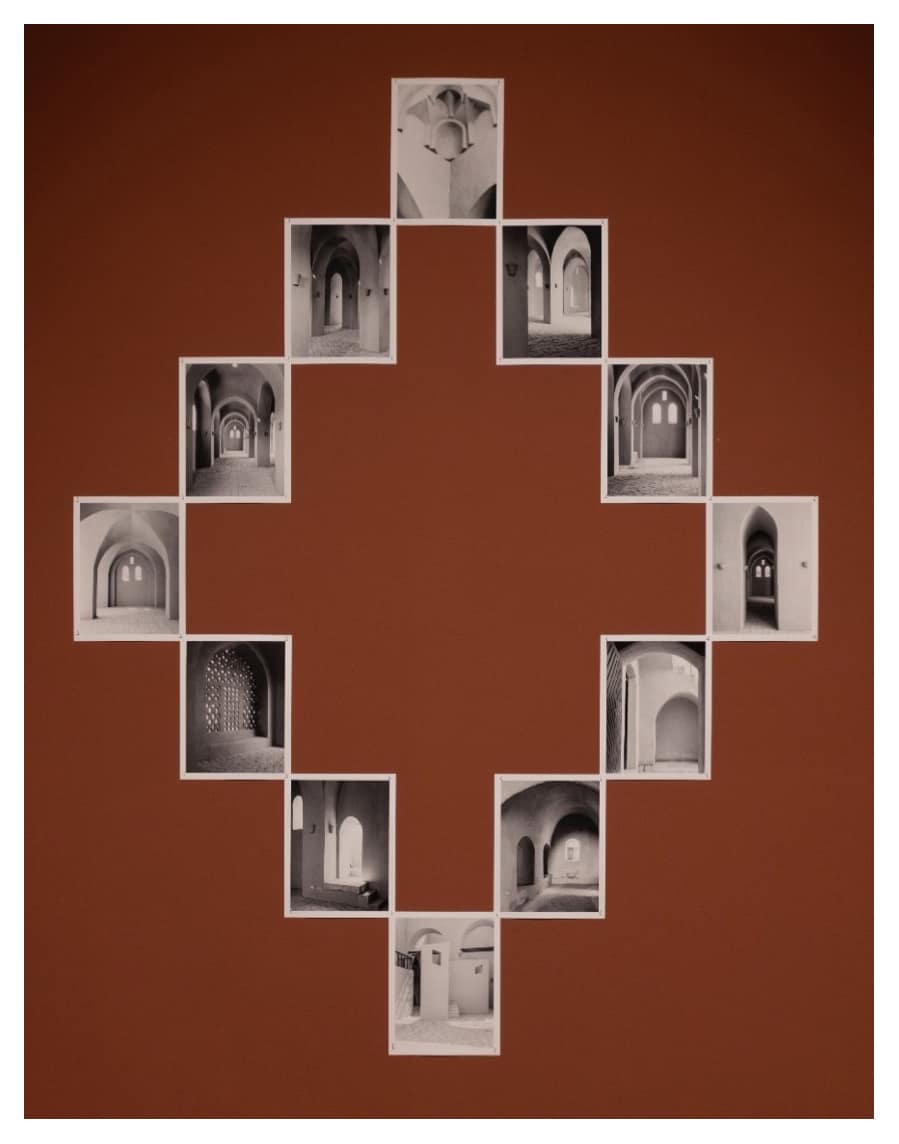
HASSAN FATHY SERIES
On the slope of the sacred mountain, theTheban Necropolis, we find the remains of the ancient village of Gourna (17th century), in the Valley of the Nobles of Ancient Egypt. Gourna expanded because of the traffic in antiquities due to the demand of the international market in the aftermath of the Napoleonic imperialist expedition in the 19th century. In 1940 the architect Hassan Fathy was commissioned to build a new village which became his iconic project. Despite its failure, it would make him a world pioneer of sustainable architecture.
Mosque, 2023
ARCHIVAL PIGMENT PRINT.
150cm x 100cm
Detail of the interior of the Hassan Fathy mosque that he made for New Gourna. In Oct 2021 UNESCO finishes restoring it due to its deteriorated state, with the aim of recovering its pioneering philosophy on sustainable architecture, bioclimatic and vernacular. Fathy rejected the modern movement advocating a decolonization of architecture.


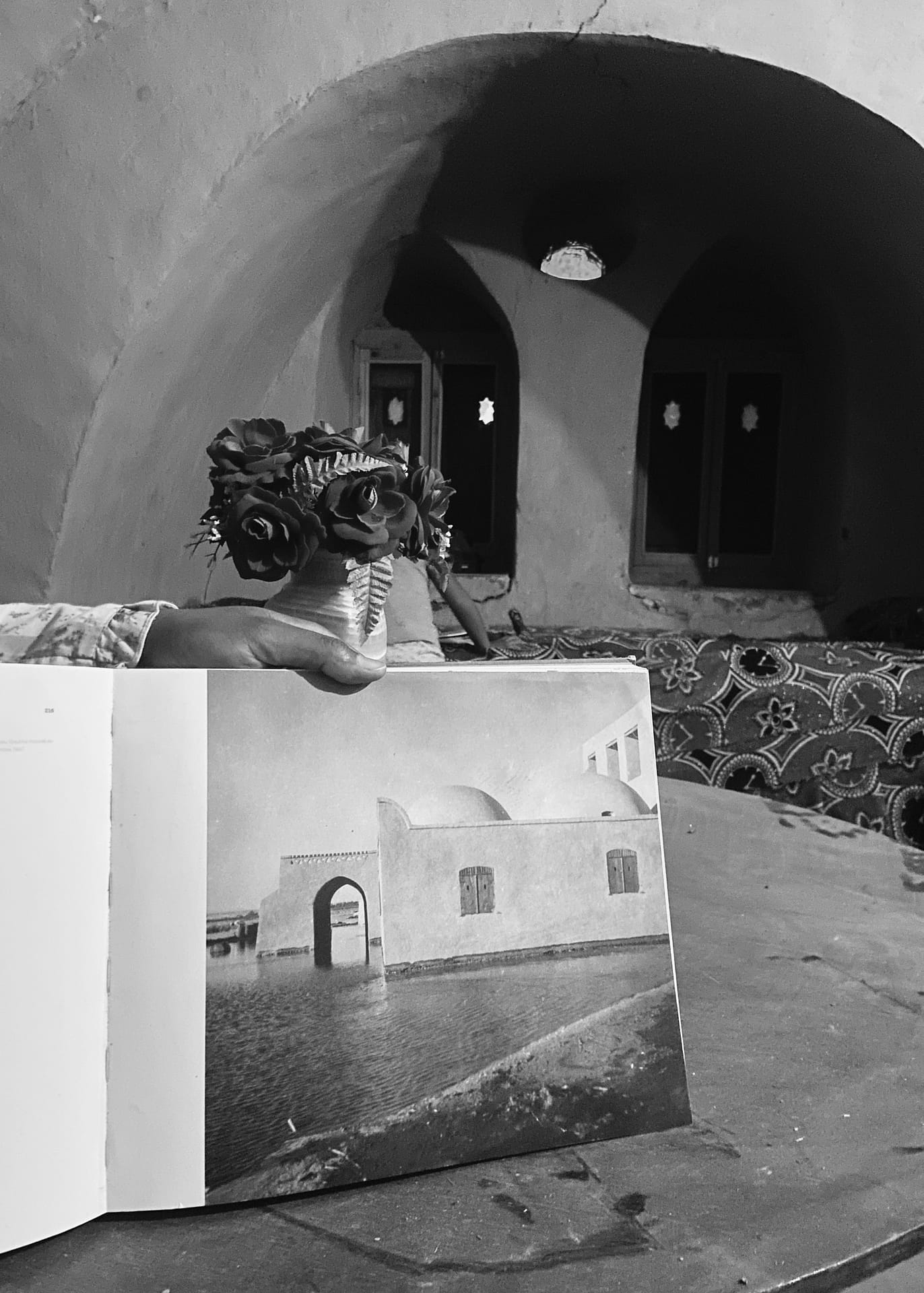
Hassan Fathy House, 2023
40cm x 30cm
Hassan Fathy Mosaic, 2023
ARCHIVAL PIGMENT PRINT
160cm x 130cm
Details of some of the interiors of the buildings designed by Hassan Fathy for New Gourna (mosque, theater, part of the market and some houses). Since 2009, this complex is included in the list of heritage sites protected by the World Monuments Fund and UNESCO, who in 2021 completes its restoration due to its state of deterioration, with the aim of recovering its pioneering philosophy on sustainable architecture, bioclimatic and vernacular.

Tomb, 2023
ARCHIVAL PIGMENT PRINT.
75cm x 50cm
Feet carved on the rock at the entrance of one of the tombs of the Valley of the Nobles, located under the houses of the ancient village of Gourna.

Mummy, 2023
ARCHIVAL PIGMENT PRINT. ARCHIVAL IMAGE FROM OLD POSTCARD, ANONYMOUS AND ACHRONIC, WITH ARTIST´S INTERVENTION.
70cm x 100cm
In the 19th century, the first travelers and tourists arriving in Egypt, after the opening of the route by the Napoleonic imperialist expedition, smuggled mummies and their parts to Europe. It is said that even Napoleon Bonaparte took a mummified head as a gift for his wife.

Old Gourna Adobe, 2023
ARCHIVAL PIGMENT PRINT.
75cm x 50cm
Detail of an adobe wall in one of the traditional houses of Gourna’s old village that have been preserved as a testimony of its past.
Exhibition leaflet for the exhibition at Casa Árabe, Madrid, with text written by the curator Blanca de la Torre and captions by the author. Design by Diego Lara. Download here


Every fraction of a degree counts, 2023
GIF
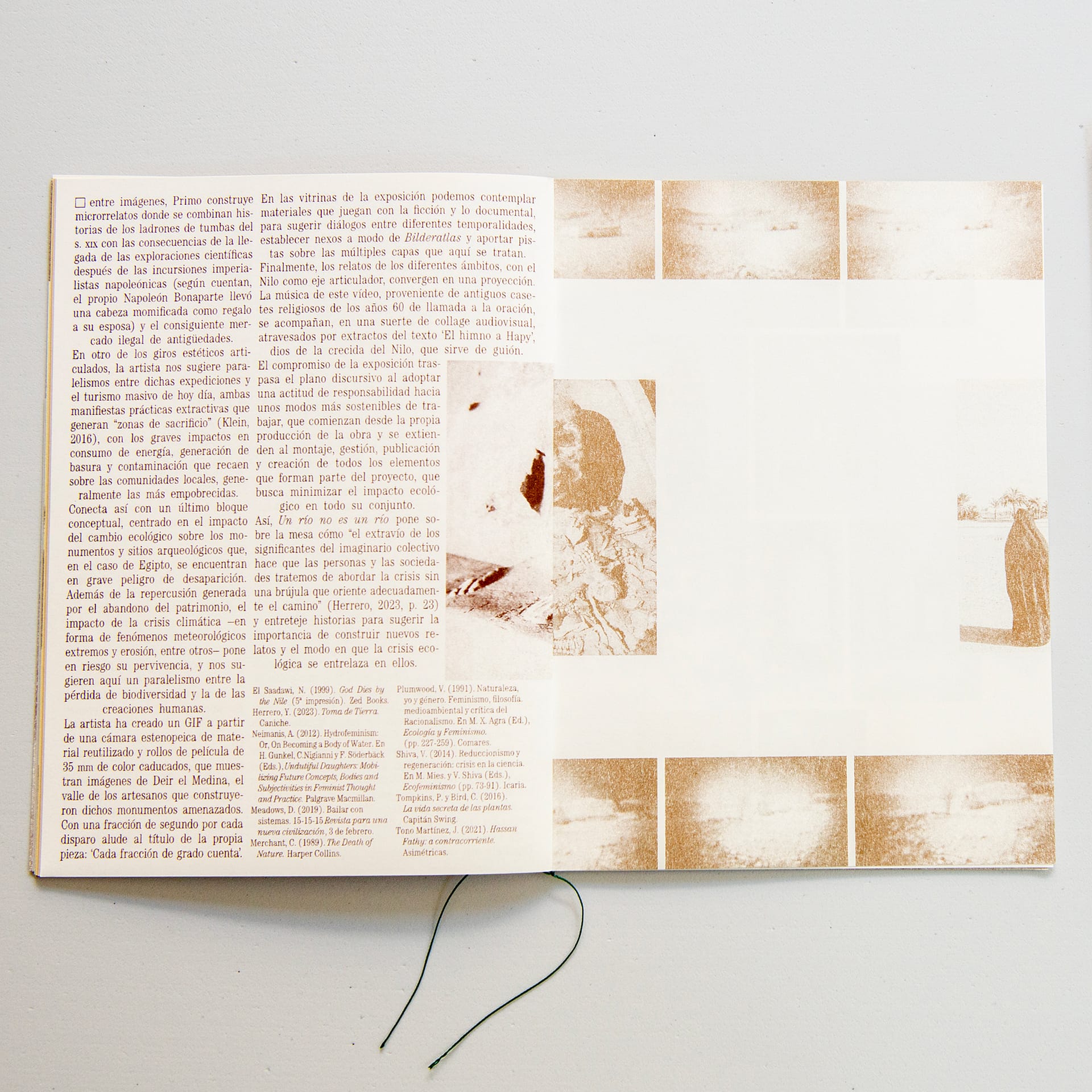
Images taken with a pinhole camera made from expired 35mm color film at Deir el-Medina, in the Valley of the Artisans. This place is home to the artisans and laborers who worked in the tombs of the Valley of the Kings and the Valley of the Queens. The Egyptians called it “The Place of Truth”, since its inhabitants were subjected to confinement and strict discipline so as not to reveal the secrets under which they worked. Today, the monuments of Ancient Egypt face enormous vulnerability due to the growing impact of climate change.
Ancestral Hybrids, 2023
Ceramic plates with drawings by the artist, made with traditional potters who use the local soil: in luxor, egypt, with barakat; in fuentes de cantespino, segovia, with juan carlos martín; and in la rambla, córdoba, with jesús luque of alfarería El Yiyo.
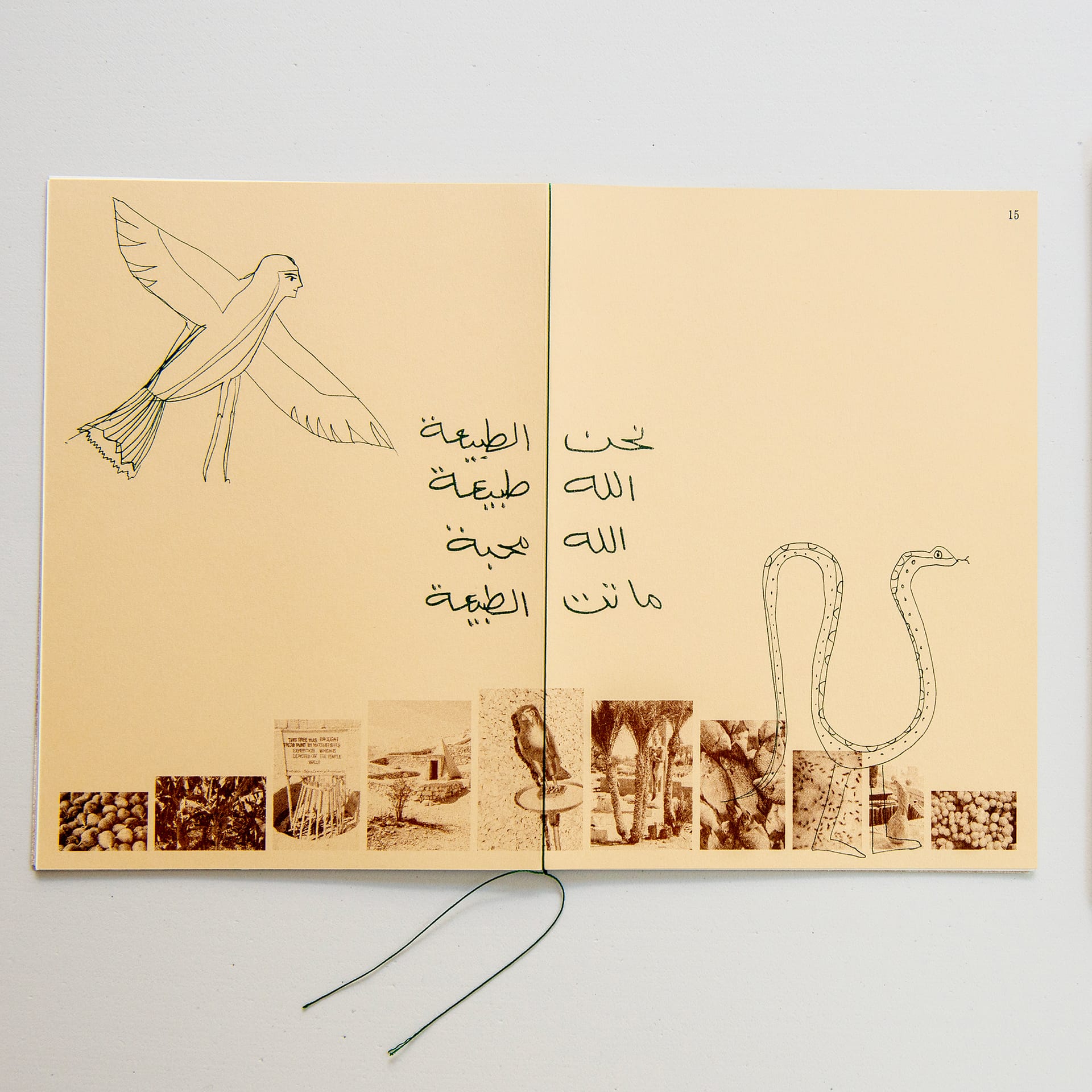
Inspired by Ancient Egypt where gods were represented as animals and trees were sacred, this piece invites us to reflect on the idea that we are nature, the coexistence between humans and non-humans and the importance of traditional knowledge in shaping possible futures.
Hymn to Hapy, 2023 VIDEO, 5’15” (shortened version 00,41”) _ Conceived as a moving photobook, this work constitutes my personal re-reading of the Hymn to Hapi. It unfolds as a meditation on our contemporary relationship with rivers, interrogating the historical and cultural shift through which reverence gave way to exploitation and domination. Using Excerpts from the text of Hymn to Hapy from José Miguel Serrano Delgado’s book Texts for the Ancient History of Egypt (2021). Song adapted from an original cassette from the 1970s in which Abdul Basic Abdul Samad recites verses from the Qur’an.
Watch the complete version here. Also available in English and Arabic, upon request.
Hapy, 2023, cyanotype, image of Hapy, in the tomb of Ramesses III of the 20th Dynasty.
The Hymn to Hapy is considered a classic Ancient Egyptian literary text. “Some even propose that it is related to the end of the Ancient Kingdom (2686 BC to 2124 BC) and First Intermediate Period (2181 BC to 2055 BC), when problems caused by drought and water table shortages contributed to the country’s collapse.”
Since the mid-20th century, the Aswan High Dam was built with the intention of ‘taming’ the almighty Nile River (work began in 1960 and ended in 1970). The dam would provide hydro-powered electricity to the population and rationalize the use of water. Ever since, these water rises have been controlled and the summer floods, which had maintained an equilibrium in the ecosystem for thousands of years, have come to an end.
The Nile is Egypt’s only water resource which is currently being serious threatened by drought and pollution. The UN predicts that the country will face critical water shortages as of the year 2025.

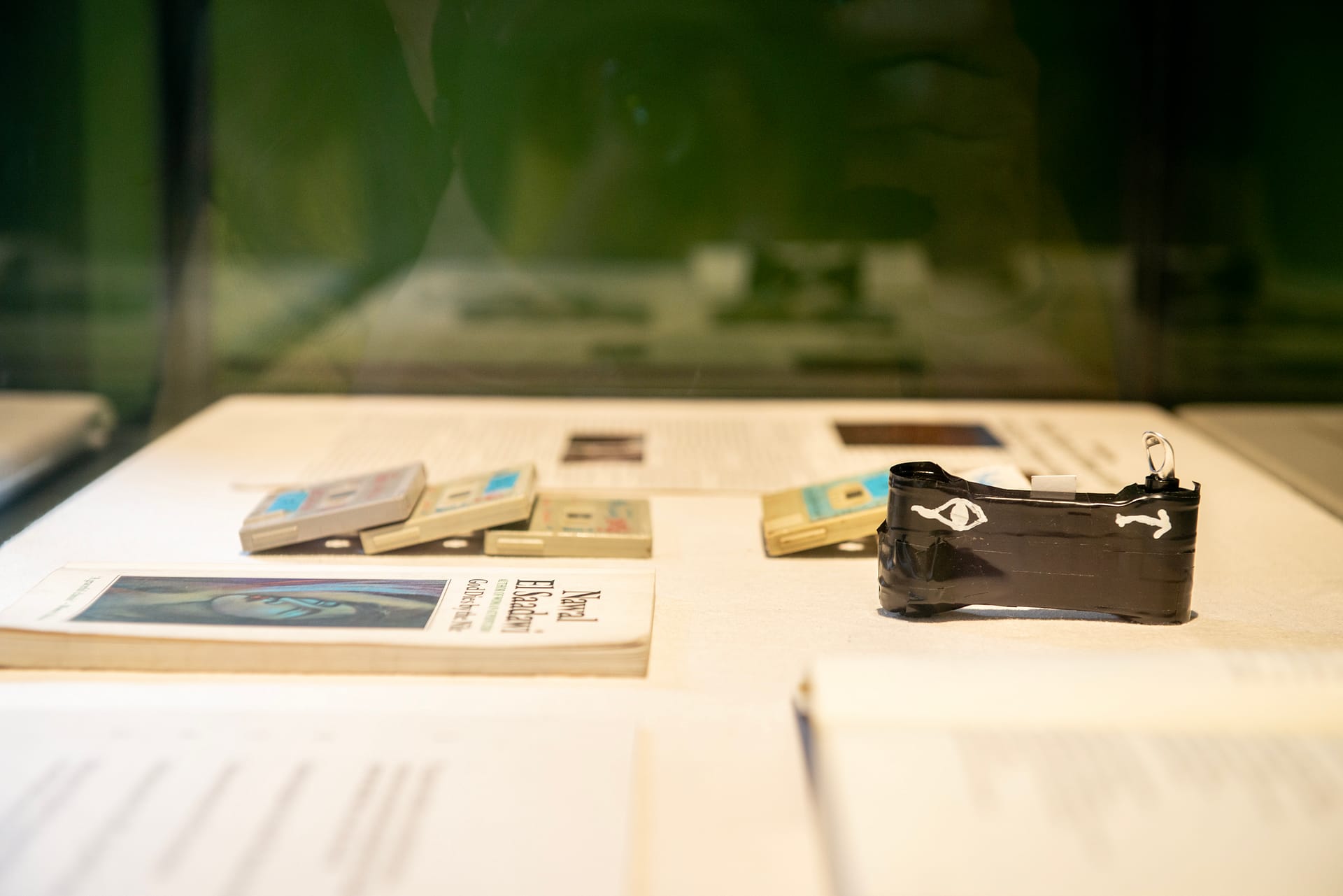
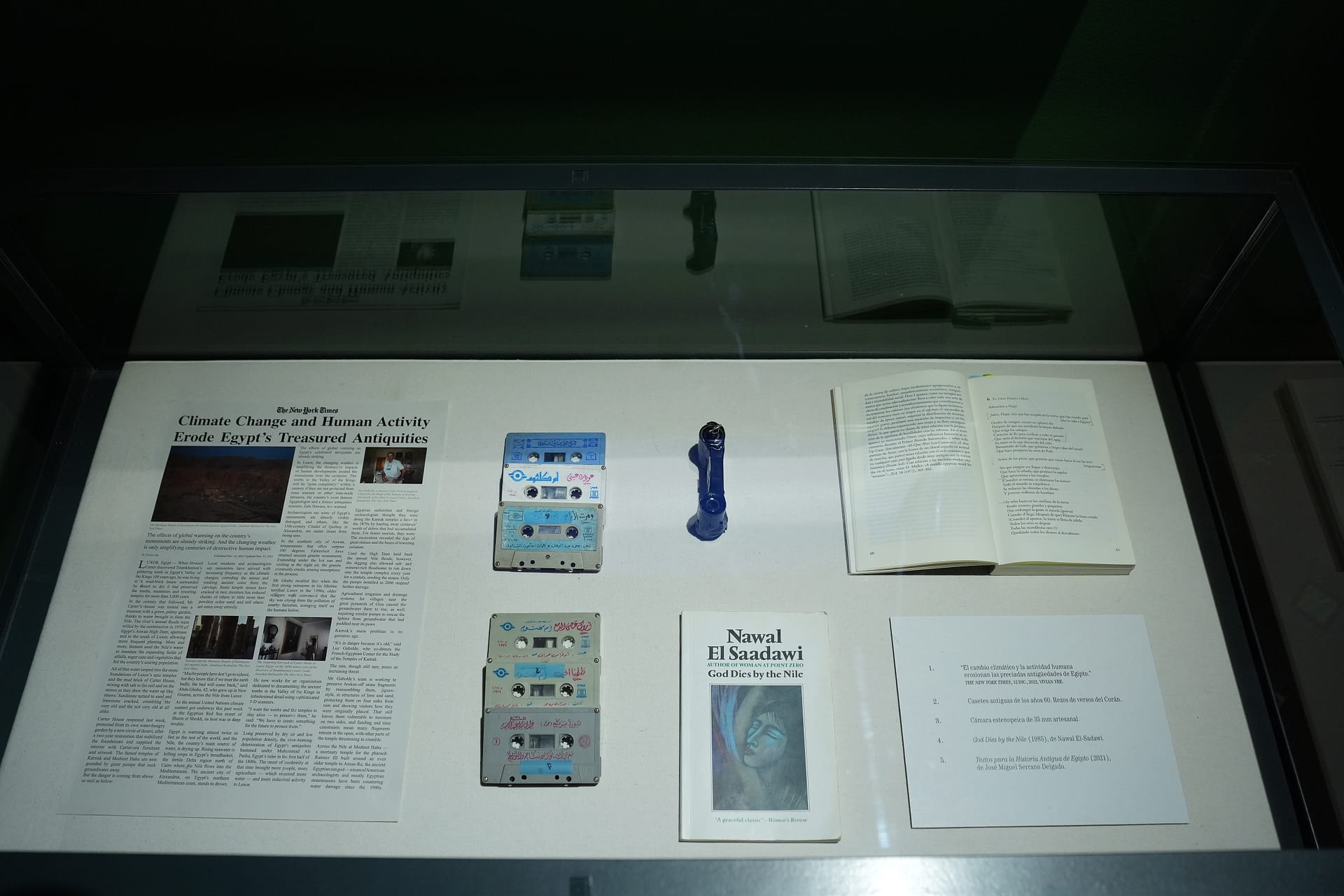
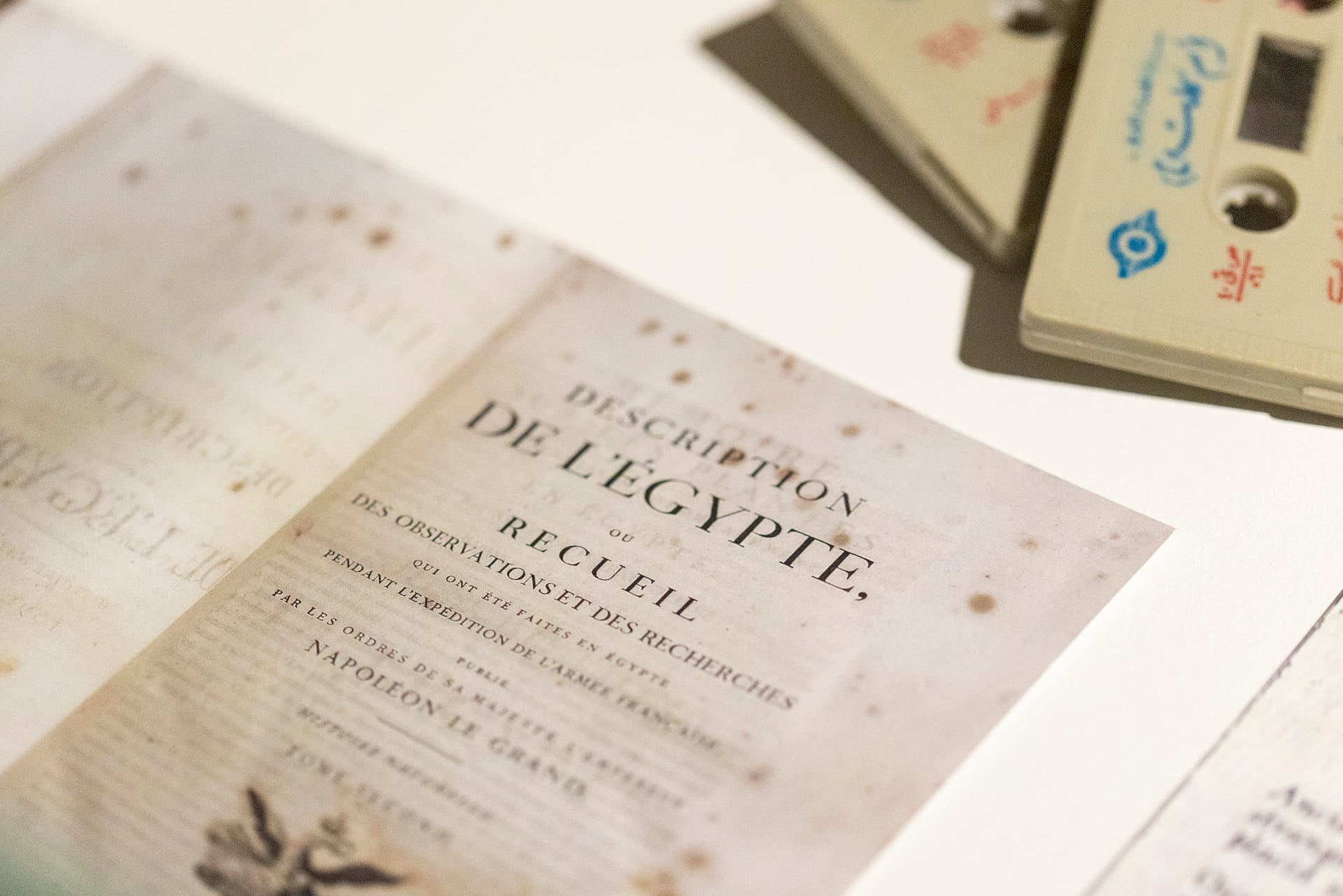
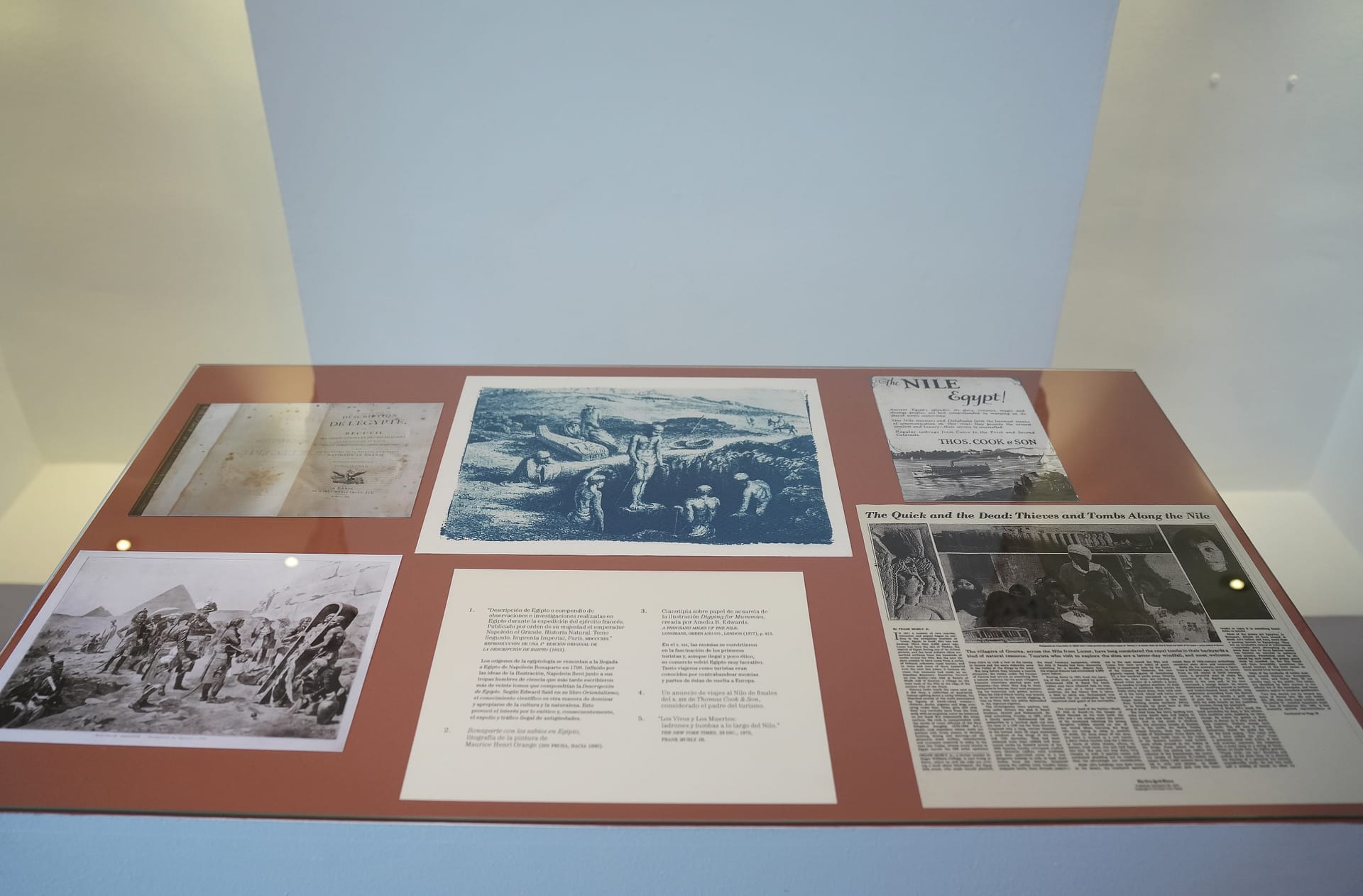
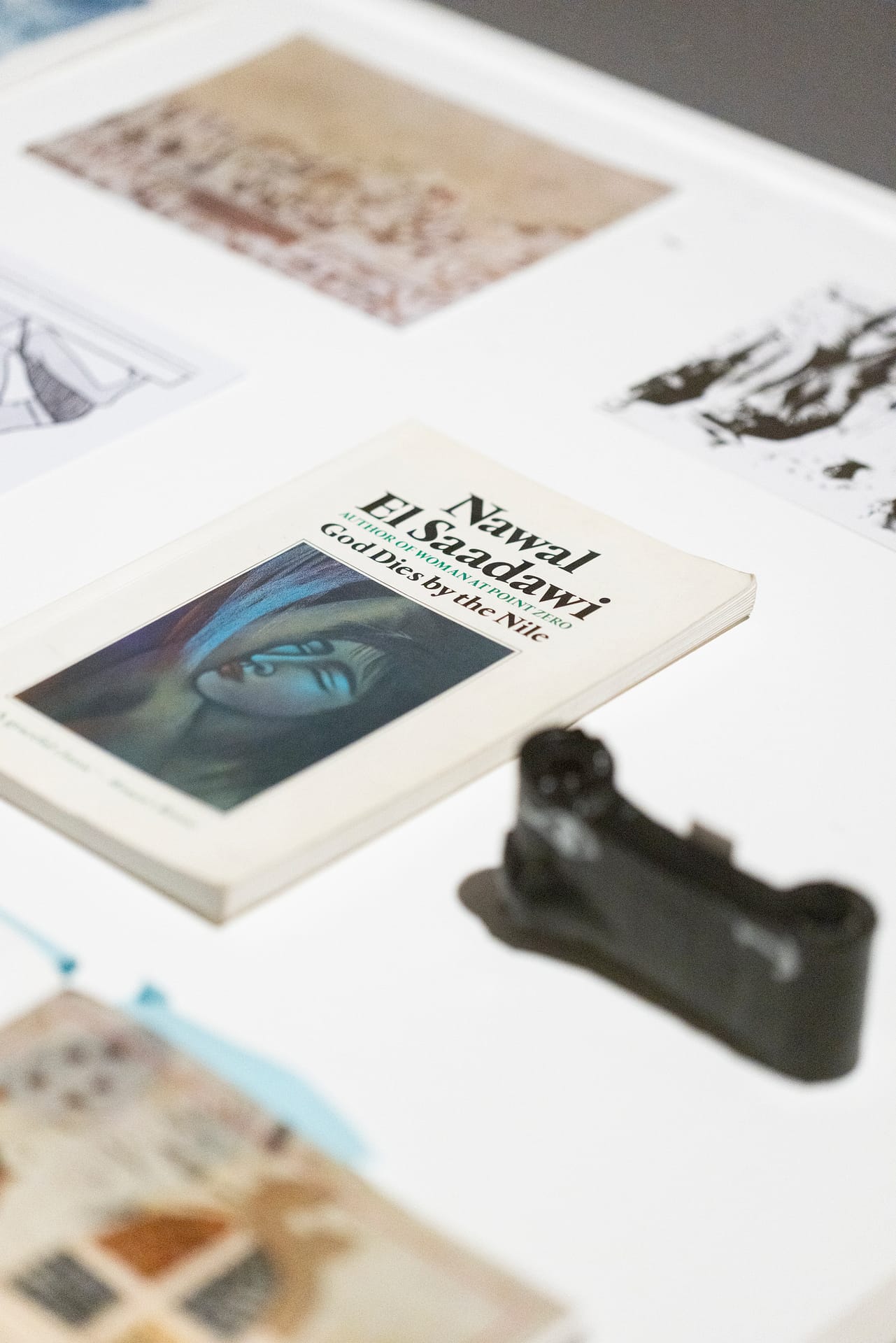
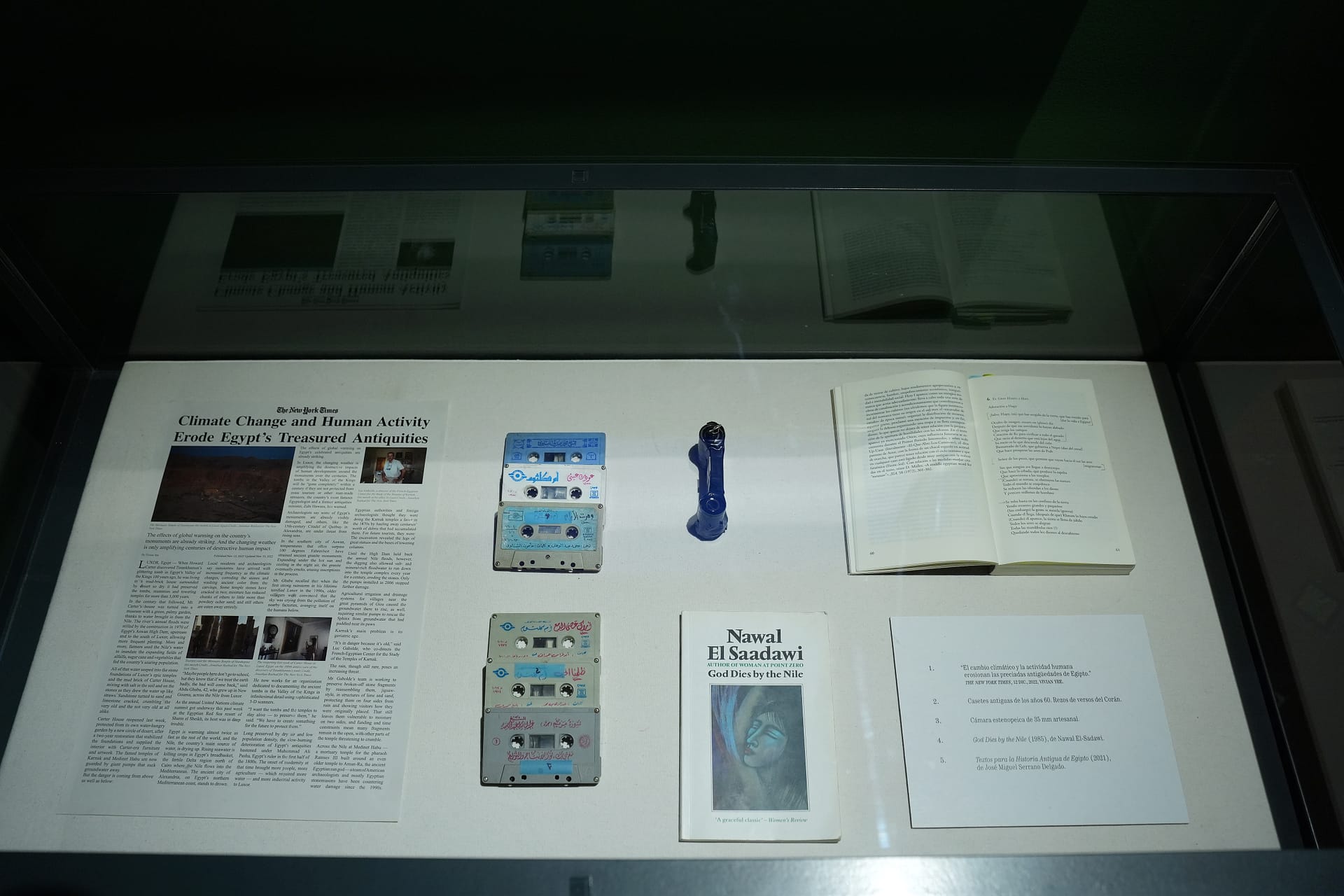
DISPLAY CASES present documents drawn from my research process, offering contextual grounding for the work. These materials range from 1960s cassette recordings and a 2022 New York Times article on the impact of climate change on Egypt’s ancient monuments, to a photograph of the original Description de l’Égypte.
A River is not A River Catalog. Download the digital PDF version english or spanish or go to books section